Industrial Valve Solutions
Lined Diaphragm Valve Manufacturer in Ahmedabad, India
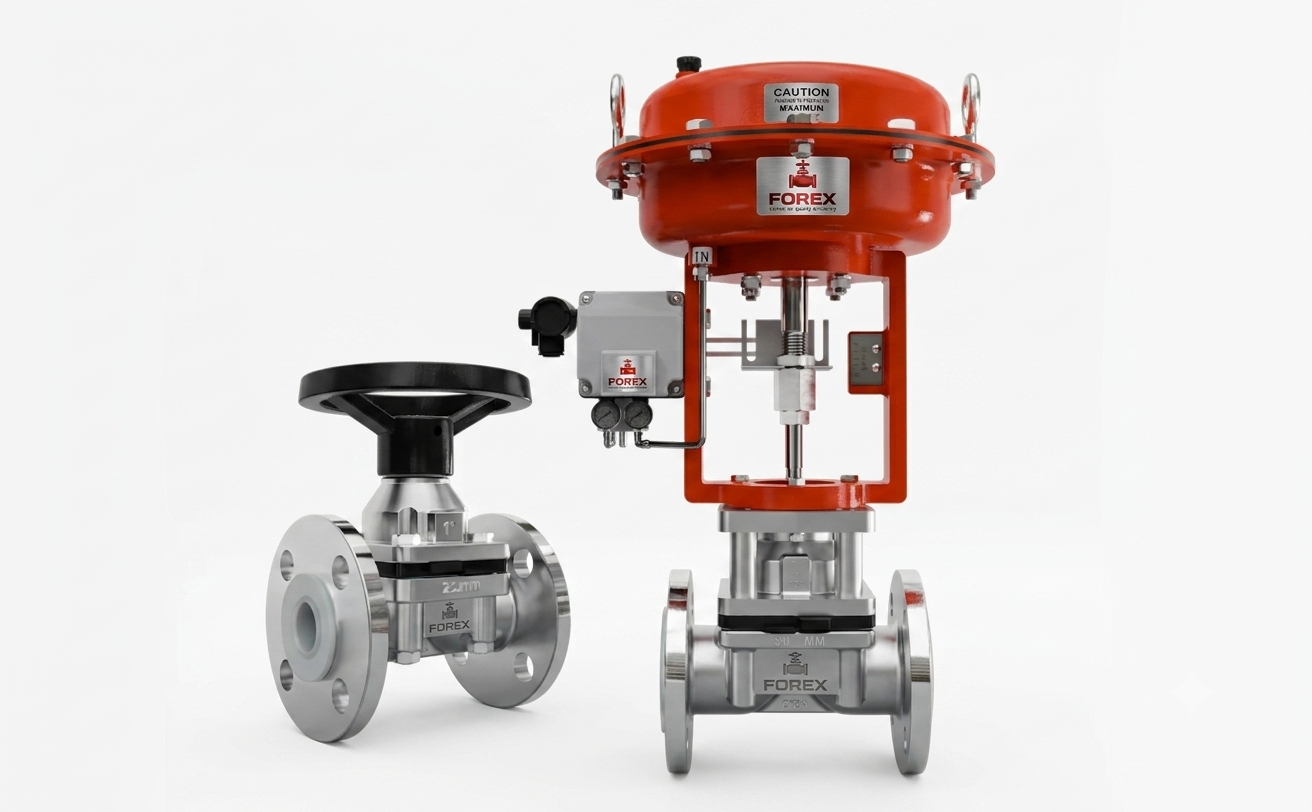
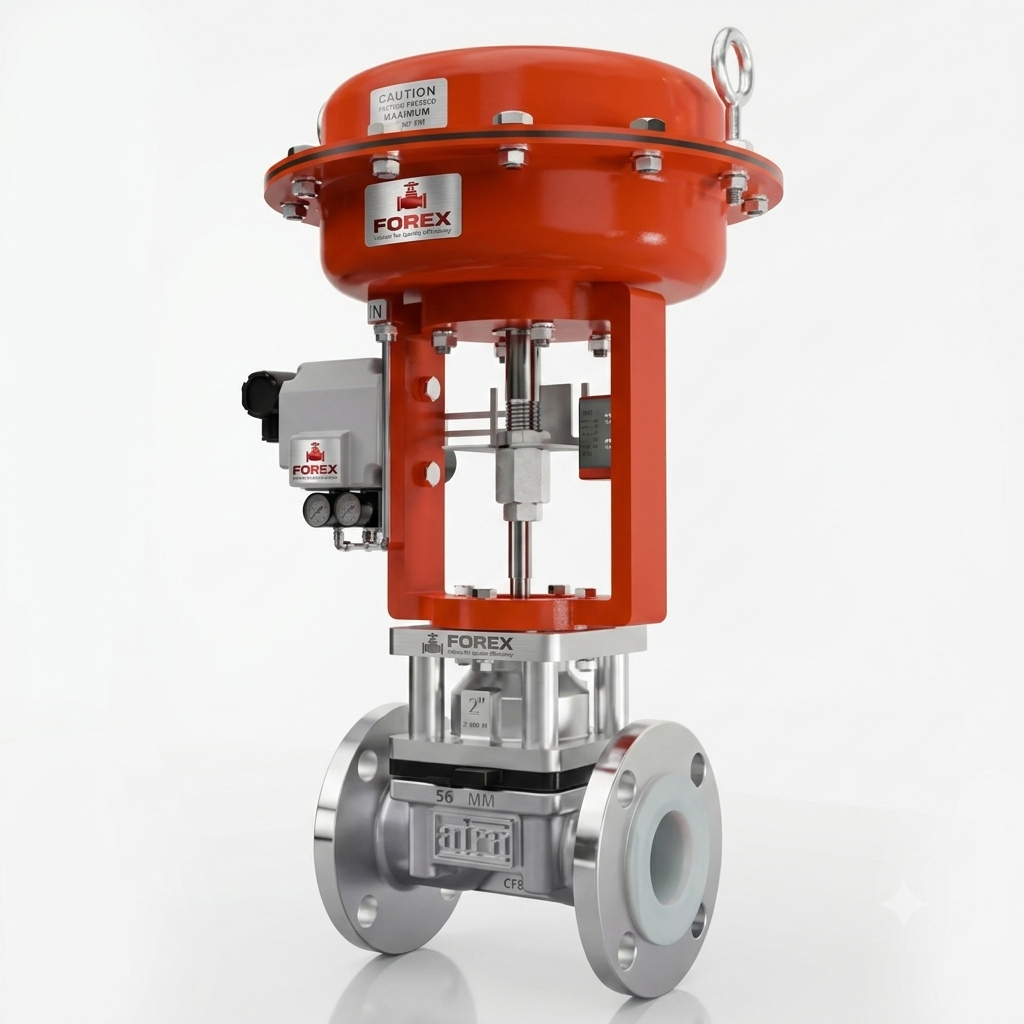
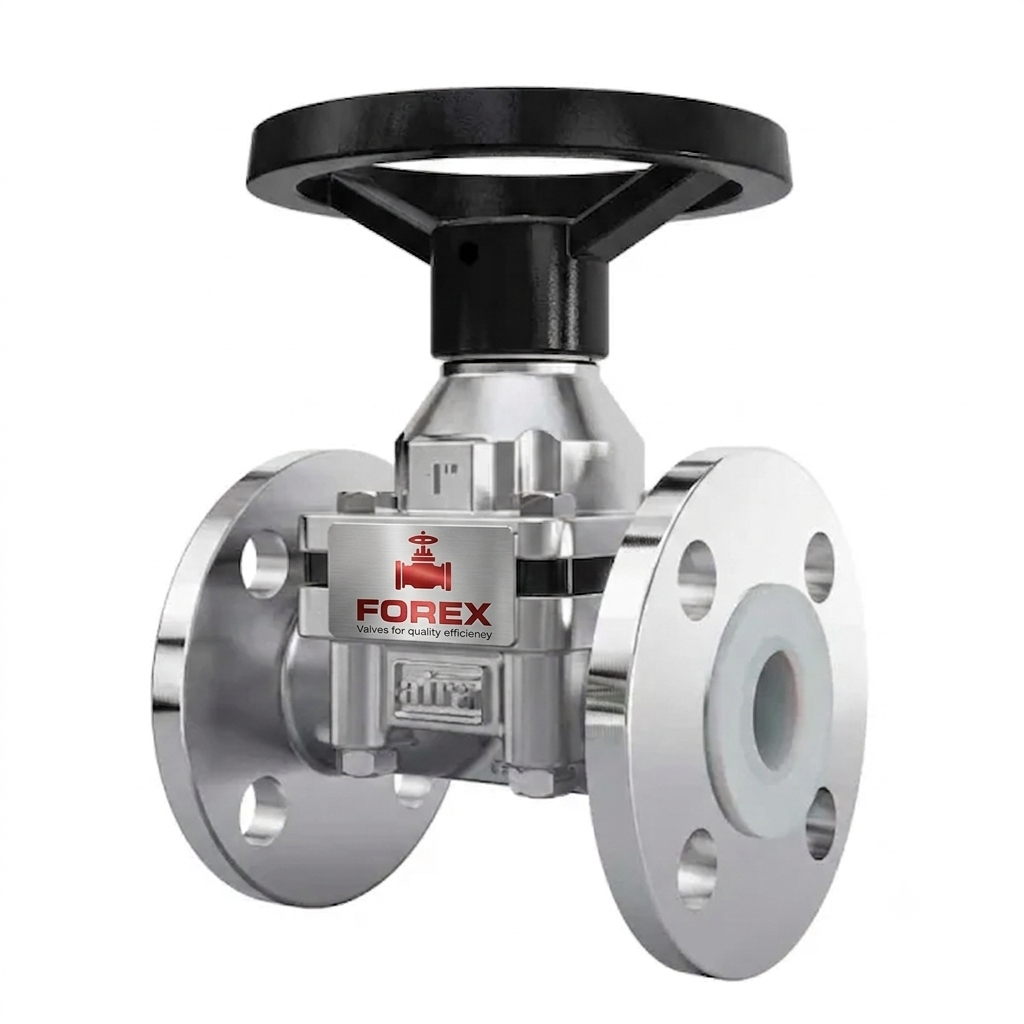
Lined diaphragm valves are used to control, regulate or isolate fluid flow in piping systems where the internal lining and diaphragm material must suit the process medium. The lining provides a protective barrier between the fluid and valve body, while the diaphragm separates the process medium from the operating mechanism.
Forex Valves is based in Ahmedabad, Gujarat, India. Selecting a lined diaphragm valve requires evaluation of chemical properties, operating temperature, pressure, lining compatibility and diaphragm material to determine suitability for the intended application.
Lined Diaphragm Valve Design and Function
A lined diaphragm valve generally consists of a valve body with a protective internal lining, a flexible diaphragm and an operating mechanism. During operation, the diaphragm moves against or away from the weir or seating area to regulate or stop the flow.
The diaphragm also isolates the process fluid from the valve's operating components. Suitability depends on the body design, lining material, diaphragm construction and service conditions.
01
Protective Internal Lining
The lining separates the process fluid from the valve body surface. Its compatibility must be verified for the chemical composition, concentration and service conditions.
02
Flexible Diaphragm
The diaphragm moves to regulate or stop flow and separates the process medium from the operating mechanism. Material selection is application-specific.
03
Operating Conditions
Body construction, lining, diaphragm design, pressure and temperature limits should be checked against the manufacturer's technical documentation.
Applications of Lined Diaphragm Valves
Lined diaphragm valves may be considered for industrial processes involving corrosive or chemically aggressive fluids, subject to material compatibility and the manufacturer's specifications.
01
Chemical Processing
Evaluate the process chemical, concentration, temperature and pressure before specifying a lined diaphragm valve.
02
Industrial Fluid Handling
Check whether the lining and diaphragm materials are compatible with the fluid and intended operating conditions.
03
Water and Wastewater
Confirm fluid characteristics, operating limits and required valve configuration for the treatment process.
04
Pharmaceutical Processes
Verify the material, construction and documentation requirements for the specific process before selecting a valve.
05
Specialty Process Systems
Application suitability depends on the medium, service conditions and the compatibility of all wetted materials.
06
Industrial Pipelines
Match valve size, end connections, pressure rating and operating requirements to the pipeline specification.
Application Suitability Must Be Verified
These are potential application areas, not a guarantee that a particular valve is suitable for every service. Confirm compatibility against the process medium, concentration, temperature, pressure and applicable product specifications.
Selecting a Lined Diaphragm Valve
Project engineers and procurement teams should verify the following information before specifying a lined diaphragm valve.
- Process medium: Identify the fluid, chemical composition and concentration.
- Operating temperature: Check the temperature limits of the lining and diaphragm.
- Operating pressure: Confirm the required working pressure against rated limits.
- Lining material: Verify compatibility with the fluid and service conditions.
- Diaphragm material: Check chemical resistance, temperature limits and operating-cycle requirements.
- End connections and size: Match the valve to the pipeline size and specified connection standard.
- Operation and maintenance: Confirm the actuation method, maintenance access and replacement requirements.
- Technical documentation: Review applicable specifications and manufacturer documentation.
Do Not Select by Pipe Size Alone
Nominal size alone does not establish suitability. Chemical compatibility, lining and diaphragm materials, operating pressure and temperature must all be considered before a valve is specified.
India and Gulf Projects
Lined Diaphragm Valves for India and Gulf Projects
Forex Valves is located in Ahmedabad, Gujarat, India, and can be contacted for lined diaphragm valve product and project enquiries. Buyers and engineering teams working on industrial projects should provide the technical requirements for review.
United Arab Emirates (UAE)
Saudi Arabia
Qatar
Oman
Kuwait
Bahrain
For projects in these markets, specify the process medium, required size, pressure, temperature, lining material and diaphragm requirements. Product configuration, technical compliance, availability and export arrangements should be confirmed directly with the supplier before procurement.
Technical Details to Include in a Valve Enquiry
Providing complete process information helps the supplier review the proposed valve configuration against the intended service.
Identify the Process Fluid
Provide the fluid name, chemical composition and concentration where applicable.
State Pressure and Temperature
Include the expected operating conditions and any relevant service limits.
Specify Lining and Diaphragm Needs
State known material requirements and request compatibility confirmation.
Confirm Size and Connections
Provide the nominal size and required end-connection standard.
Describe Operation and Maintenance
Include actuation preferences and any maintenance or diaphragm replacement requirements.
Review Product Documentation
Confirm the proposed configuration, operating limits and technical compliance before procurement.
Lined Diaphragm Valve Enquiries at Forex Valves
Forex Valves is based in Ahmedabad, Gujarat, India. Buyers can submit their process and technical requirements to confirm whether a suitable lined diaphragm valve configuration is available.
For an overview of related products, explore the Forex Valves product catalogue.
For project-specific requirements, submit an enquiry through the Forex Valves contact page.
Confirm material compatibility, operating limits, product availability and technical compliance against the relevant manufacturer documentation before ordering.
Frequently Asked Questions
What is a lined diaphragm valve?
A lined diaphragm valve has a protective internal lining and a flexible diaphragm used to control or isolate fluid flow. The lining and diaphragm materials must be suitable for the process medium and operating conditions.
Where are lined diaphragm valves used?
They may be used in chemical processing, industrial fluid handling, water and wastewater treatment, and other applications where a compatible lined valve design is required. Suitability depends on the fluid, concentration, temperature, pressure and specified materials.
How do I select the lining material?
Select the lining according to the process fluid, its concentration, operating temperature and pressure. Confirm chemical compatibility and service limits with the manufacturer before ordering.
Why is diaphragm material important?
The diaphragm contacts or separates the process medium according to the valve design and must meet the relevant chemical compatibility, temperature and operating-cycle requirements. Confirm the suitable material against the product documentation.
What details should I provide when requesting a quotation?
Provide the process medium and concentration, operating pressure and temperature, valve size, end connection, lining material requirements, diaphragm requirements and any applicable project standards.
Can I enquire about lined diaphragm valves for Gulf projects?
Project enquiries can be submitted to Forex Valves in Ahmedabad, India, for requirements in the UAE, Saudi Arabia, Qatar, Oman, Kuwait and Bahrain. Product availability, specifications and export arrangements require direct confirmation.