
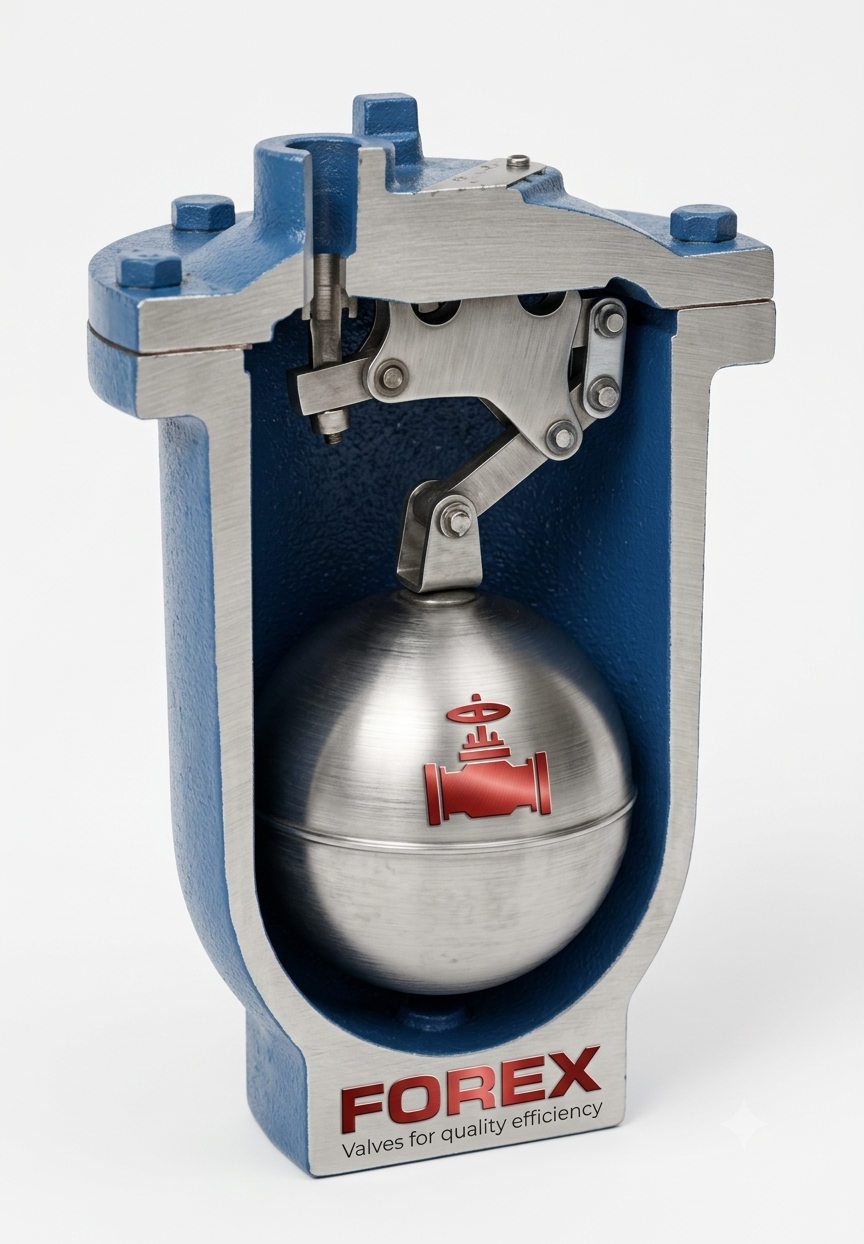
Forex Valves Air Release Valves are designed to automatically remove accumulated air from pressurized pipeline systems during normal operation. They are generally installed at high points of pipelines where air pockets can collect.
By releasing unwanted air from the pipeline, these valves help maintain efficient flow, stable pipeline operation and reliable system performance.
The automatic float-operated mechanism allows accumulated air to escape while providing a positive shut-off when water reaches the valve chamber.
An Air Release Valve is an automatic valve used to continuously release accumulated air from a pressurized pipeline during normal system operation. These valves are commonly installed at high points where air can accumulate.
Accumulated air can reduce the effective flow area of a pipeline, affect hydraulic performance and contribute to pressure fluctuations. An Air Release Valve helps remove this unwanted air and supports efficient pipeline operation.
Automatically releases accumulated air from pressurized pipeline systems during normal operation.
The float mechanism automatically responds to changes in water level inside the valve chamber.
Helps minimize the effect of trapped air and supports efficient water flow through the pipeline.
Resilient seating provides dependable sealing when the valve chamber is filled with water.
Designed with robust materials for dependable performance in water and industrial pipeline applications.
Suitable for installation at pipeline high points and compatible with various pipeline configurations.
| Valve Type | Automatic Float-Operated Air Release Valve |
|---|---|
| Nominal Size | 1/2" to 6" |
| Service | Clean Water / Raw Water Applications |
| Operating Principle | Automatic Float Operation |
| Body Material | Cast Iron / Ductile Iron |
| Optional Body Materials | Cast Steel / Stainless Steel / Cast Bronze |
| Float Material | Stainless Steel 316 |
| Internal Trim | Stainless Steel 316 |
| Seating | Resilient Seating |
| Connection | Threaded / Flanged, depending on size and design |
| Pressure Rating | Application and design dependent |
| Design Standard | AWWA C512, where applicable |
| Drinking Water Certification | NSF/ANSI 61, where applicable |
| Optional Features | Vacuum Check, Outlet Hood, Isolation Valve and Inflow Prevention Arrangement |
The Air Release Valve consists of a pressure-rated body and cover, float mechanism, linkage assembly, air-release orifice and resilient seating arrangement.
Stainless steel internal components can provide improved corrosion resistance and dependable operation in water service. The final material selection should be based on the fluid, pressure, temperature and application requirements.
During pipeline operation, air can accumulate at high points in the piping system. As air collects inside the valve chamber, the water level decreases and the float moves downward.
The movement of the float opens the air-release orifice, allowing accumulated air to escape from the pipeline while the system remains under pressure.
After the accumulated air has been discharged, water enters the valve chamber and raises the float. The float mechanism then closes the orifice and provides a positive shut-off.
Air Release Valves are generally installed at high points of a pipeline where air accumulation is expected. Correct positioning helps the valve effectively remove accumulated air during normal pipeline operation.
Valve selection should consider pipeline diameter, operating pressure, required air-release capacity, fluid service and connection requirements.
Selecting the appropriate Air Release Valve requires evaluation of the pipeline and operating conditions. Important parameters include:
An Air Release Valve is an automatic valve designed to remove accumulated air from a pressurized pipeline during normal system operation.
It is generally installed at high points of pipelines where air can accumulate during operation.
Its primary purpose is to release accumulated air from the pipeline and help maintain efficient and stable pipeline operation.
An Air Release Valve is designed primarily to release accumulated air while the pipeline is under pressure. Air/Vacuum Valves are designed to admit and exhaust larger volumes of air during pipeline filling, draining and vacuum conditions.
Forex Valves supplies Air Release Valve solutions for water, pipeline and industrial applications. Contact our team to discuss the required valve size, pressure rating, material and connection for your application.
Contact Forex Valves