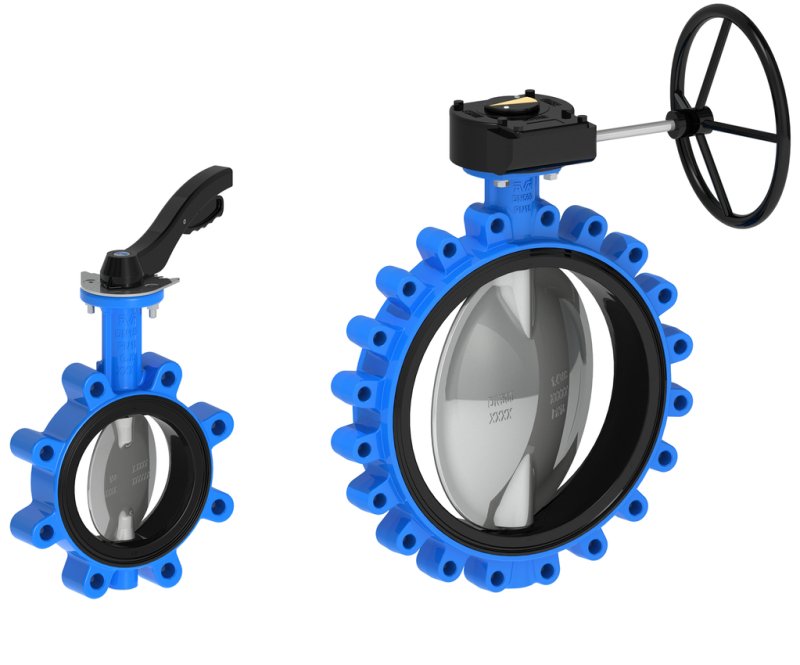
Lug Type Butterfly Valve Manufacturers & Suppliers in India
Forex Valves is a manufacturer and supplier of lug type butterfly valves
for isolation and flow control in compatible industrial piping systems.
These valves have a lugged body with separate bolting points for
connection to mating pipe flanges. Selection depends on pipeline size,
pressure, temperature, process medium, sealing requirements and method
of operation.
Lug type butterfly valves are used in water treatment, utility piping,
HVAC and industrial process applications where the valve configuration
meets the operating requirements. Explore our
industrial butterfly valve range
to compare the available designs and configurations.
What Is a Lug Type Butterfly Valve?
A lug type butterfly valve is a quarter-turn valve with threaded lugs
built into its body. These lugs are used for bolting the valve to mating
pipe flanges. The internal disk rotates approximately 90 degrees between
the open and closed positions.
Depending on the design and installation arrangement, a lug type valve
may offer maintenance flexibility when one side of a pipeline needs to
be disconnected. Suitability for end-of-line service must be verified
against the valve pressure rating, manufacturer's installation
instructions and isolation requirements.
Design and Construction of a Lug Type Butterfly Valve
Lugged Valve Body
The body houses the disk, shaft and sealing components and provides the
connection to the pipeline. Threaded lugs allow the valve to be bolted
to mating flanges using the specified fasteners and installation
procedure.
Shaft and Disk
The disk rotates to open, restrict or close the flow channel. The shaft
transmits torque from the lever, gearbox or actuator to the disk. Disk
and shaft materials should be compatible with the process fluid and
operating conditions.
Seat and Sealing Arrangement
The seat is the sealing interface between the disk and the valve body.
Seat selection affects sealing performance, operating torque,
temperature limits and chemical compatibility. EPDM, NBR, PTFE and
metal seating options may be considered where supported by the selected
valve design.
Quarter-Turn Operation
A butterfly valve operates through a quarter turn of approximately
90 degrees. The operating mechanism must provide sufficient torque for
the valve size, differential pressure, seat configuration and service
conditions.
Technical Specifications of Lug Butterfly Valves
The Forex Valves product information lists the specifications below.
Confirm the applicable combination for the exact model before ordering.
| Parameter |
Listed Specification |
| Valve Type |
Lug Type Butterfly Valve |
| Size Range |
DN 40 to DN 1200 |
| Pressure Ratings |
PN10 / PN16 / PN25 / PN40, based on design |
| Body Materials |
CI / DI / WCB / CF8 / CF8M |
| Disk Materials |
SG Iron / SS304 / SS316 |
| Seat Materials |
EPDM / NBR / PTFE / Metal, based on service |
| Shaft Materials |
SS410 / SS304 |
| End Connection |
Lug type |
| Operation |
Lever / Gear / Pneumatic / Electric |
| Design Standards |
API / BS / EN, where applicable |
| Standard Testing |
API 598, listed for the product |
Maximum permissible pressure and temperature depend on the particular
valve construction, material combination, seat and size. Refer to the
product datasheet and applicable standards for the selected
configuration.
Selection of Body, Disk and Seat Materials
Material selection should take into account the process fluid, fluid
concentration, operating temperature, pressure and corrosion
requirements.
Body and Disk Materials
-
Cast Iron (CI):
May be considered for compatible water and general utility service.
-
Ductile Iron (DI):
Has different mechanical properties from cast iron and may be suitable
for applications requiring ductile iron construction.
-
Carbon Steel (WCB):
Used for selected industrial services where pressure, temperature and
fluid requirements are suitable for the material.
-
Stainless Steel (CF8 / CF8M):
Stainless steel castings for applications requiring suitable corrosion
resistance.
-
SG Iron / SS304 / SS316 Disks:
Disk selection depends on valve design, process media and required
corrosion resistance.
Choosing Seat Material
-
EPDM:
Typically used for compatible water and utility applications.
-
NBR:
May be suitable for some oil-based services, depending on the fluid and
temperature.
-
PTFE:
Provides chemical resistance for compatible applications. Pressure,
temperature and seating requirements must be checked.
-
Metal Seat:
May be specified for certain higher-temperature or more demanding
service conditions where the valve design allows.
No single material is suitable for every process fluid. Check the
complete wetted-material combination before making the final selection.
Pressure Rating and Torque of Lug Type Butterfly Valves
The pressure rating indicates the rating applicable under specified
conditions. It does not determine the permissible operating pressure
for every combination of temperature and material.
Valve operating torque is affected by disk size, differential pressure,
seat friction, material selection and process conditions. Gearbox or
actuator selection must be based on the manufacturer's torque
requirements and the intended operating duty.
Manual, Gearbox and Actuator Operation
Lever Operated Butterfly Valve
Where valve size and operating torque permit, a lever provides manual
quarter-turn control and direct operation.
Gear Operated Butterfly Valve
When manual lever operation requires excessive effort, a gearbox can
reduce the effort required from the operator. The gearbox must match
the operating torque and service requirements of the valve.
Pneumatic Butterfly Valves
Pneumatic actuation uses compressed air to operate the valve. It can
be applied in automatic systems where the actuator, control accessories
and available air supply meet the application requirements. Explore our
pneumatic butterfly valve options
for automated operation. Confirm actuator torque and valve compatibility
for the intended service.
Electric Butterfly Valve
An electric actuator provides powered operation and may be used for
remote control or integration with plant automation systems. Check
actuator torque, power supply, control requirements and operating
frequency.
Industrial Applications of Lug Type Butterfly Valves
Lug type butterfly valves can be used in the following applications
when the materials, pressure ratings, temperature limits and sealing
arrangements are compatible with the service.
Wastewater and Water Treatment
Used for flow isolation in compatible water treatment, distribution
and wastewater systems.
HVAC and Air Conditioning Systems
Used for isolation in chilled-water, cooling-water and other compatible
utility lines.
Process Industry Piping
Used for flow isolation in process lines when the selected valve meets
the operating and sealing requirements.
Chemical Utility Systems
Chemical service requires verification of the body, disk, shaft, seat
and other wetted materials against the process medium.
Plant Utilities and Infrastructure
Used in utility and infrastructure pipelines where the lug connection
configuration meets the project's installation and maintenance
requirements.
Wafer Type vs Lug Type Butterfly Valve
Both lug type and wafer type butterfly valves have a rotating disk,
but their body connection arrangements differ.
| Comparison Point |
Lug Type Butterfly Valve |
Wafer Type Butterfly Valve |
| Body Connection |
Threaded lugs provide bolting points. |
Body is generally clamped between mating flanges. |
| Installation Hardware |
Bolting arrangement specified for the lug design. |
Bolting arrangement specified for the wafer design. |
| Maintenance Access |
May permit one-side disconnection if the design and installation allow it. |
Removal normally requires the specified flange and piping arrangement. |
| Space Requirements |
Depend on body and lug dimensions. |
Frequently used for compact installations. |
| Cost |
Varies according to size, materials and design. |
May have a lower initial cost in comparable configurations. |
| Selection Criteria |
Connection requirements, isolation and maintenance access. |
Space, cost, flange arrangement and service requirements. |
Neither design is necessarily suitable for every installation. Before
choosing, check the pressure class, flange compatibility, installation
instructions and intended isolation procedure.
Installation and Maintenance of Lug Type Butterfly Valves
Proper installation helps avoid damage to the seat, disk and body
connections.
-
Check compatibility:
Check valve size, pressure class, flange dimensions, process fluid and
operating temperature.
-
Inspect installation:
Verify that mating flanges, sealing surfaces and fasteners meet the
manufacturer's specifications.
-
Check disk clearance:
Ensure the disk can rotate without contacting the pipes or surrounding
components.
-
Follow bolting instructions:
Use the specified fasteners and recommended tightening procedure for
the valve and flange arrangement.
-
Check operation:
Check valve movement and carry out the functional tests required by
the manufacturer's instructions.
-
Inspect during service:
Check for seat wear, disk damage, shaft misalignment, leakage and
abnormal operating torque.
Isolate the pipeline, depressurize it and drain it as required by the
approved site safety procedure before loosening any connection. Never
assume that a lug type valve can safely hold pressure when one side
is disconnected.
Design and Testing Standards
Forex Valves product information mentions API, BS and EN for design and
API 598 for testing, where applicable. The relevant standard and edition
must be checked against the selected valve model and purchase
specification.
Design requirements, face-to-face dimensions, flange compatibility,
pressure-temperature limitations and inspection requirements are
separate considerations. If a project requires compliance with a
specific standard, request the applicable product documentation.
Manufacturer and Supplier of Lug Type Butterfly Valves in India
Forex Valves supplies industrial valve products to clients in India and
worldwide. For a lug type butterfly valve inquiry, provide the required
nominal size, pressure class, process fluid, operating temperature,
material preference, connection details and operating method.
These details help define the valve configuration to be evaluated for
the application. Verify availability, manufacturing specifications,
testing documentation and delivery requirements with Forex Valves.
Frequently Asked Questions
What is a lug type butterfly valve?
It is a quarter-turn valve with threaded lugs in its body for bolting
to mating pipe flanges.
How does a lug type butterfly valve work?
The operating mechanism turns the disk approximately 90 degrees to
open or close the flow passage.
What is a lug type butterfly valve generally used for?
It is used for flow isolation and suitable flow-control duties in
compatible water, utility, HVAC and industrial piping applications.
What is the difference between lug type and wafer type butterfly valves?
A lug type valve has threaded body lugs for bolting to mating flanges.
A wafer type valve is generally sandwiched between two flanges. The
choice depends on installation, operating conditions and maintenance
requirements.
Which pressure classes are listed for these valves?
Forex Valves product information lists PN10, PN16, PN25 and PN40,
depending on design. Check the rating for the selected size, materials
and operating conditions.
Which seat material should I choose?
EPDM, NBR, PTFE and metal seats are listed as options depending on
valve design. Selection should be based on fluid compatibility,
pressure, temperature and sealing requirements.
Can a lug type butterfly valve be electrically operated?
Listed operating options include lever, gear, pneumatic and electric
operation. Verify the availability and actuator compatibility of the
requested model.
What causes leakage in a lug type butterfly valve?
Possible causes include seat wear, disk damage, material
incompatibility, misalignment or incorrect flange installation.
Inspection is needed to determine the actual cause.
How do I select the appropriate lug type butterfly valve?
Specify the pipeline size, pressure, temperature, process fluid,
required sealing performance, flange arrangement, operating method
and maintenance requirements. Check the final configuration against
the manufacturer's datasheet.
Request Details for a Lug Type Butterfly Valve
Contact
Forex Valves
with your application details to discuss a suitable valve configuration,
technical documentation and quotation requirements.