
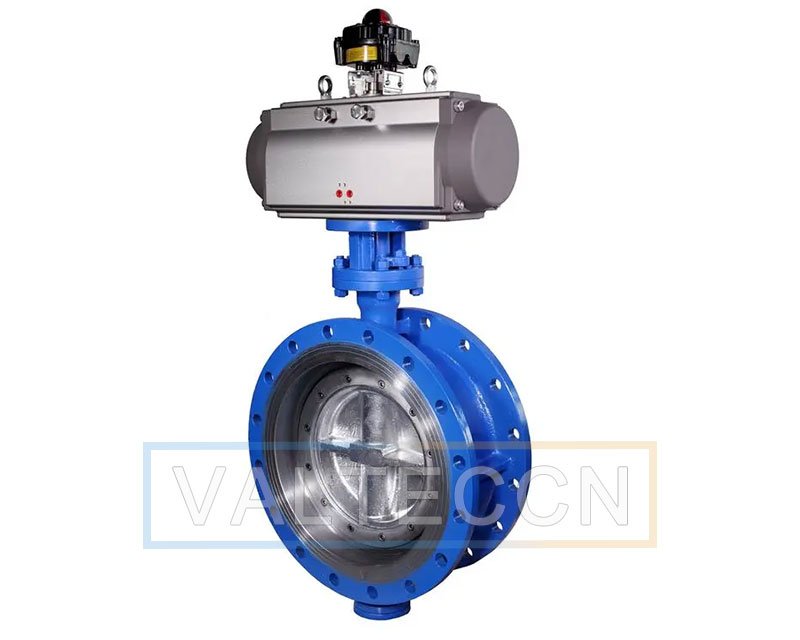
Technical Specifications
| Specification | Details |
|---|---|
| Valve Size Range | 2 Inches to 48 Inches |
| Body Material | Cast Iron, Ductile Iron, Stainless Steel, Carbon Steel |
| Disc Material | Stainless Steel, Nylon Coated, Ductile Iron |
| Seat Material | EPDM, NBR, PTFE |
| End Connection | Wafer, Lug, Flanged |
| Pressure Rating | PN10, PN16, Class 150, Class 300 |
| Temperature Range | -20°C to 200°C |
| Operation | Pneumatic Actuated (Double Acting / Single Acting) |
| Actuator Type | Pneumatic Spring Return, Double Acting |
| Standards | API, ANSI, DIN, JIS |
A pneumatic butterfly valve uses a compressed-air-powered actuator to rotate a disc inside the valve body, allowing flow isolation or, in suitable designs, flow regulation. It is used in industrial piping systems where automated valve operation or remote control is required.
Valve selection depends on pipeline size, operating pressure and temperature, process media, body and seat materials, connection type, actuator torque and available air pressure. These parameters must match the application requirements and selected valve configuration.
A pneumatic butterfly valve is a quarter-turn valve operated by a pneumatic actuator. The actuator transfers rotational movement through the valve shaft to the disc.
When the disc rotates towards alignment with the flow passage, the valve opens. When the disc turns across the passage, it restricts or shuts off flow according to the valve design and seating arrangement.
Pneumatic butterfly valves are used in industrial applications that require automated operation, integration with control systems or remote actuation.
A pneumatic butterfly valve operates through the following sequence:
The valve's response to air-supply failure depends on the actuator design. A spring-return actuator may provide a defined fail position, while a double-acting actuator generally requires a suitable control arrangement to determine its response.
The body houses the disc and provides the connection between the valve and the piping system. Its material and construction must suit the operating pressure, temperature and process media.
The disc rotates within the valve body to control the flow passage. Disc material and design affect media compatibility and operating performance.
The stem transfers rotational movement from the actuator to the disc.
The seat provides the sealing interface between the disc and the valve body. Its material must be compatible with the process media and operating temperature.
The actuator converts compressed-air energy into rotational movement. Its torque output must be sufficient for the selected valve under the specified operating conditions.
Depending on the automation requirements, the assembly may use a solenoid valve, limit switch box, position indicator, positioner or air-filter regulator. Compatibility and availability must be confirmed for the selected configuration.
A wafer type butterfly valve is installed between compatible pipe flanges. Selection requires checking the flange dimensions, pressure rating, installation arrangement and manufacturer's instructions.
A lug type butterfly valve has bolting points in its body for connection to the mating flanges. Its suitability for end-of-line service or installation with one side disconnected depends on the specific valve design and manufacturer's pressure limitations.
A flanged butterfly valve connects to the piping through flanged ends. The flange standard, dimensions, pressure rating and mating flange arrangement must match the pipeline requirements.
A double flanged butterfly valve has a flange at each end of the body. Its selection depends on pipeline design, installation space, pressure conditions and the specified valve dimensions.
A resilient-seated butterfly valve uses a non-metallic seat to provide sealing. Seat selection depends on media compatibility, temperature, pressure and required sealing performance.
The actual valve constructions offered by Forex Valves should be confirmed against the current product catalogue.
A single-acting actuator uses compressed air for movement in one direction and a spring for the return movement. The fail position depends on the actuator configuration and how it is assembled with the valve.
A double-acting actuator uses compressed air to drive movement in both directions. Selection depends on required operating torque, air-supply pressure and the control arrangement.
The choice between single-acting and double-acting operation depends on the operating cycle, automation requirements, available air supply and required response during loss of air pressure.
Material selection must account for the process media and operating conditions.
| Component | Possible Material Options | Selection Considerations |
|---|---|---|
| Valve body | Cast iron, ductile iron, carbon steel or stainless steel | Pressure, temperature, strength and media compatibility |
| Disc | Ductile iron, carbon steel or stainless steel | Corrosion resistance, strength and process compatibility |
| Seat | EPDM, NBR, PTFE or other specified materials | Chemical compatibility, temperature and sealing requirements |
| Stem or shaft | Material specified for the valve design | Strength, corrosion resistance and operating torque |
These are general industrial material options, not confirmation that every combination is available from Forex Valves. Verify the actual material options against the relevant product datasheet.
The following parameters should be checked before selecting a valve and actuator.
| Parameter | Requirement to Verify |
|---|---|
| Nominal size | Required DN or pipeline diameter |
| Valve construction | Wafer, lug, flanged or other specified design |
| Pressure rating | Operating pressure and applicable valve rating |
| Temperature range | Minimum and maximum operating temperatures |
| Body and disc materials | Compatibility with the process media |
| Seat material | Temperature, media and sealing requirements |
| Actuator type | Single-acting or double-acting |
| Air-supply pressure | Required operating pressure for the selected actuator |
| Operating torque | Valve torque under the specified conditions |
| Control accessories | Solenoid valve, limit switches, positioner or other requirements |
| Connection dimensions | Compatibility with the pipeline and mating flanges |
Exact sizes, pressure ratings, temperature limits, materials and actuator configurations must be confirmed from the manufacturer's documentation.
The actuator must provide sufficient torque to operate the valve under the specified conditions. Actuator sizing may depend on valve size, differential pressure, seat friction, process temperature, operating frequency and the valve's torque characteristics.
The available air pressure also affects actuator torque output. Therefore, the actuator's torque output at the actual minimum supply pressure must be checked against the valve's operating requirements.
Selecting an actuator based only on valve diameter or nominal air pressure may result in an unsuitable configuration.
Pneumatic butterfly valves may be suitable for compatible industrial systems, including:
Application suitability depends on the valve design, pressure and temperature limits, process media, seat material and actuator configuration.
| Feature | Pneumatic Butterfly Valve | Electric Butterfly Valve |
|---|---|---|
| Operating mechanism | Compressed-air-powered actuator | Electric motor-powered actuator |
| Required utility | Suitable compressed-air supply | Suitable electrical supply |
| Control integration | Depends on actuator and pneumatic control accessories | Depends on the electric actuator and control interface |
| Maintenance considerations | Actuator, air supply and pneumatic accessories | Actuator, electrical connections and associated components |
| Selection factors | Air availability, torque and operating cycle | Electrical availability, torque and operating cycle |
The appropriate actuator depends on the site's available utilities, control requirements, operating conditions and maintenance arrangements.
A manual butterfly valve uses a hand lever or gearbox, depending on its design. A pneumatic butterfly valve uses compressed air to operate the actuator.
Pneumatic actuation can support remote operation and automated processes. Manual operation may be sufficient when local operation meets the system's requirements.
A butterfly valve controls the flow passage with a rotating disc, whereas a ball valve uses a rotating ball with a bore. Their suitability depends on the required flow capacity, shut-off performance, pressure and temperature conditions, installation space and process media.
Compare the actual valve designs and ratings before selecting a valve for a specific application. View the industrial ball valve range for comparison.
Before choosing a pneumatic butterfly valve, confirm the following requirements:
Final selection should be based on the approved valve and actuator datasheets.
Maintenance intervals depend on operating conditions, process media, cycling frequency and manufacturer recommendations.
Applicable valve standards depend on the valve design, application, connection type, pressure rating and project requirements. Standards should not be assumed to apply to every pneumatic butterfly valve.
Before specifying compliance with API, EN or ASME standards, verify the exact standard and its applicability against the relevant product documentation. Testing, certification and compliance claims must be supported by the manufacturer's technical records.
When sourcing a pneumatic butterfly valve, buyers should confirm the valve construction, body and seat materials, pressure and temperature limits, actuator sizing, control accessories and required technical documentation.
Forex Valves' available butterfly valve configurations and pneumatic actuator options should be confirmed against its current catalogue. Review the butterfly valve product range to identify the relevant valve family.
For technical evaluation, provide the required valve size, operating pressure and temperature, process media, connection type, actuator operation and available air pressure.
It is used to open, close or, in suitable designs, regulate flow in compatible industrial piping systems through pneumatic actuation.
Compressed air operates the actuator, which rotates the valve shaft and disc to change the flow passage.
A single-acting actuator uses compressed air for movement in one direction and a spring for return. A double-acting actuator uses compressed air for movement in both directions.
Body, disc, shaft and seat materials vary by design and application. Selection depends on pressure, temperature, process media and the manufacturer's available configurations.
Check the valve's torque requirements against the actuator's torque output at the available air-supply pressure. Consider the operating cycle and required fail position.
Some butterfly valves can be used for throttling within their specified operating range. Confirm that the selected valve is suitable for the required control duty.
Provide the nominal size, pressure, temperature, process media, connection type, actuator operation, available air pressure and required control accessories.
To evaluate a pneumatic butterfly valve requirement, provide:
Contact Forex Valves to discuss the application and confirm available configurations and technical documentation.
Your request has been submitted successfully. Our team will review your details and get back to you within 24 hours.
Thank you!
Your enquiry has been submitted successfully.
Our team will contact you shortly.