INDUSTRIAL PRESSURE PROTECTION
Safety Valve Manufacturer in India
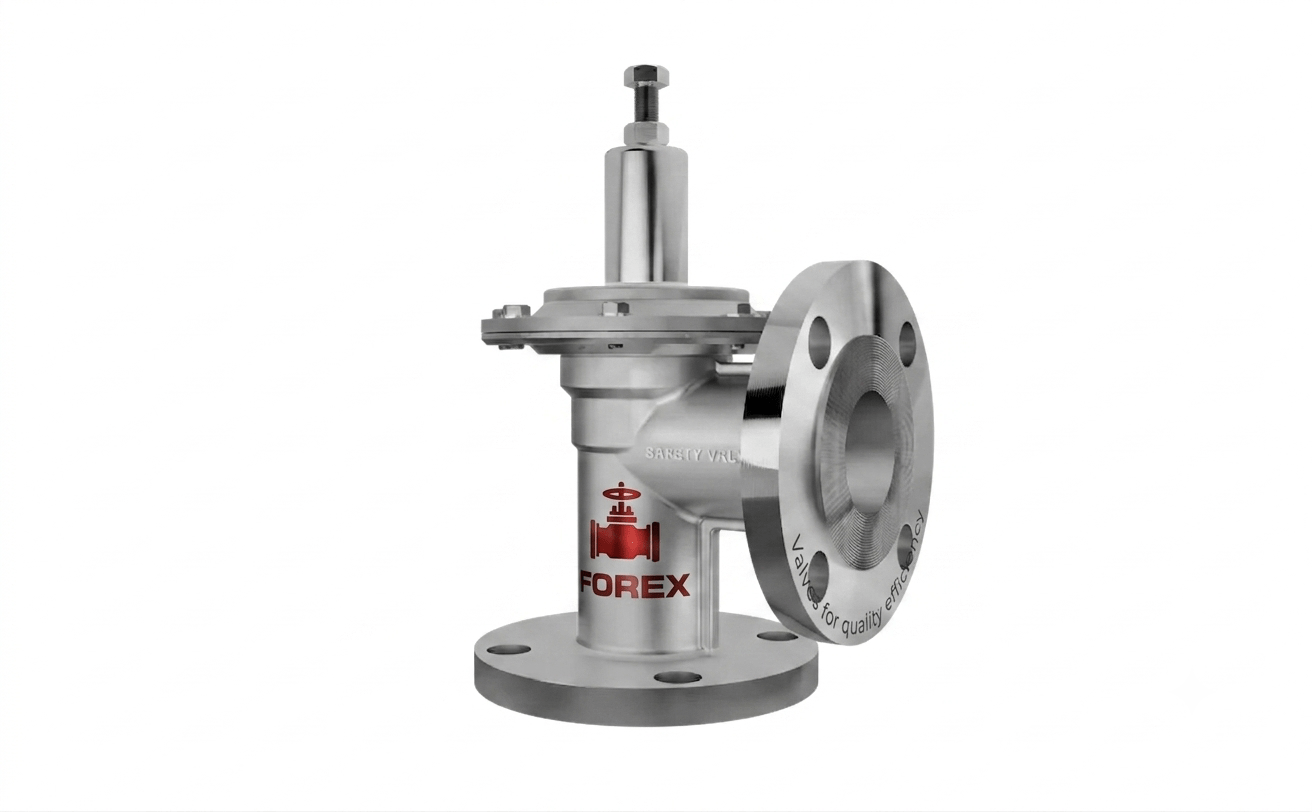
Safety valves are pressure-relief devices designed to protect
pressurised systems from exceeding their permitted pressure limits.
They open when the pressure reaches the specified set pressure and
release the required fluid to help prevent overpressure conditions.
Forex Valves, based in Ahmedabad, Gujarat, India, provides a point
of contact for safety valve product enquiries and industrial valve
requirements. Selection depends on the operating medium, set pressure,
required discharge capacity, temperature, connections and applicable
design standards.
Safety Valve Design and Function
A safety valve is used in systems where pressure must be controlled
within defined operating limits. When pressure reaches the valve's
set point, the valve opens to discharge the medium. It is designed
to close again as pressure decreases, according to its operating
characteristics.
The appropriate valve must be selected according to the system's
pressure-relief requirements and relevant engineering standards.
A safety valve should not be selected based on nominal size alone.
Key Safety Valve Selection Factors
01
Set Pressure
Establish the specified pressure at which the valve is
designed to open, according to the protected system requirements.
02
Discharge Capacity
Determine the required relief capacity for the applicable
overpressure scenario using system design data.
03
Operating Medium
Identify whether the service involves steam, gas, vapour
or another medium compatible with the valve design.
04
Pressure and Temperature
Confirm normal and maximum operating conditions and the
valve's applicable design limits.
05
Materials
Verify material compatibility with the fluid, temperature,
pressure and installation environment.
06
Connections and Standards
Check inlet and outlet connections, installation requirements,
design standards and applicable regulations.
Safety Valve Applications
Safety valves may be used in industrial systems where protection
against excessive pressure is required, subject to the valve's
certified design and suitability for the application.
- Industrial process and pressure systems
- Steam and boiler-related systems, where approved
- Compressed-air and gas systems
- Industrial utility and equipment protection
- Process plants handling compatible gases or vapours
- Other pressure systems covered by the selected valve design
Important: Suitability depends on valve design,
fluid properties, operating conditions and applicable regulations.
Verify the selected valve's certification and rated capacity for
the intended service.
How to Select a Safety Valve
| Parameter |
What to Confirm |
| Set Pressure |
The specified pressure at which the valve is designed to open. |
| Operating Pressure |
Normal system pressure and permitted operating range. |
| Discharge Capacity |
Required flow capacity for the defined overpressure scenario. |
| Operating Medium |
Steam, gas, vapour or other medium approved for the valve. |
| Temperature |
Normal and maximum operating temperature and design limits. |
| Valve Material |
Compatibility with the fluid and operating environment. |
| Connections and Size |
Required inlet and outlet connections and pipeline configuration. |
| Standards and Testing |
Applicable design, testing, certification and regulatory requirements. |
Final selection and sizing should be completed by a qualified
engineer using the system design data and applicable requirements.
Nominal size alone is not sufficient to establish suitability.
Safety Valve Manufacturer in Ahmedabad and Gujarat
Forex Valves is based in Ahmedabad, Gujarat, India. Industrial
buyers, plant operators, contractors and engineering teams in
Ahmedabad and across Gujarat can prepare safety valve enquiries
with details of the intended application and operating conditions.
Include the operating medium, normal pressure, set pressure,
temperature, required discharge capacity, connection details
and quantity to clarify the technical requirements.
Safety Valve Enquiries Across India
Industrial customers and project teams across India can enquire
about safety valves for suitable pressure-protection applications.
Share the project location, technical specifications, operating
conditions and applicable standards so the requirements can be
reviewed.
Product configuration, applicable certifications and delivery
schedules should be confirmed before placing an order.
Gulf Countries and Worldwide Project Enquiries
Safety valve enquiries may relate to projects in the UAE,
Saudi Arabia, Qatar, Oman, Kuwait, Bahrain and other international
markets.
For export or project-related enquiries, provide the destination
country, required quantity, operating medium, set pressure,
temperature, connection details and applicable project standards.
Availability, export arrangements, certifications and delivery
schedules should be confirmed directly before ordering.
Frequently Asked Questions
What is the purpose of a safety valve?
A safety valve helps protect pressurised equipment and systems
by releasing fluid when pressure reaches its specified set point.
How is a safety valve selected?
Selection depends on set pressure, operating conditions,
discharge capacity, fluid properties, materials, connection
details and applicable standards.
Can the same safety valve be used for steam, gas and liquid?
Not necessarily. The valve must be specifically suitable and
correctly sized for the operating medium and the relevant
pressure-relief conditions.
Is set pressure the same as normal operating pressure?
No. Set pressure is the pressure at which the valve is designed
to open. Normal operating pressure is the pressure at which the
system usually runs. Their required relationship depends on the
equipment design and applicable requirements.
What details should be shared for a safety valve enquiry?
Share the operating medium, normal and maximum operating
pressure, set pressure, temperature, required discharge
capacity, connection size, material requirements, quantity
and project location.
How can I enquire about safety valves from Forex Valves?
Prepare your application details and technical requirements
and submit them through the enquiry option below. Product
suitability and availability require confirmation.
Discuss Your Safety Valve Requirements
Share your operating medium, set pressure, temperature, discharge
capacity, connection details and project requirements to support
a technical review of the required valve configuration.
Submit a Technical Enquiry
Final selection, sizing, certification and availability must be
confirmed against the approved product documentation and system
design requirements.
Explore the Industrial Valve Range
Review the wider Forex Valves product catalogue to identify
product categories relevant to your industrial piping and
equipment requirements.
View Product Catalogue